Products / Open Telegraph
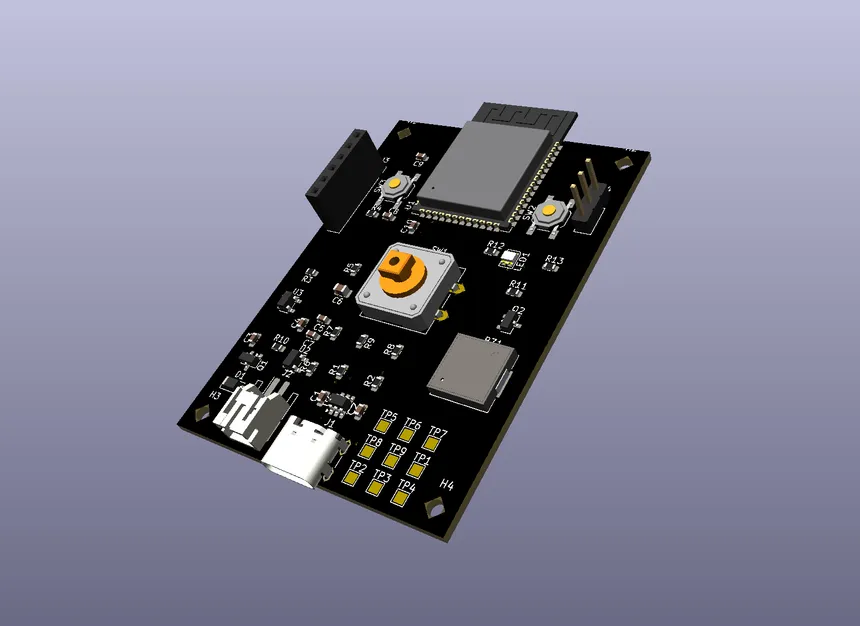
A pocket-size Morse key. One button, one RGB LED, an ESP32-S3, and a battery. Plug it in over USB-C or pair it over Bluetooth and it types Morse into any device as a standard keyboard. Fully open, down to the copper.
The Problem
Morse code has no modern hardware.
Telegraph keys are museum pieces or ham-radio accessories. Nothing plugs into the devices people actually use. Learning Morse today means a radio license, a rig, and a wall of legacy equipment before you send a single character.
The oldest digital protocol deserves a first-class input device. Nobody builds one.
The Approach
A single button as a universal keyboard.
Open Telegraph decodes Morse in firmware and presents itself as a standard HID keyboard. USB on the desk, Bluetooth in the pocket. No drivers, no companion software required. It works in any app on any operating system.
It answers one question: can a single button type on your phone and computer? Everything that is not that question was cut.
Architecture
Interaction
Everything the user ever touches.
Firmware
Turns presses into keystrokes.
Hardware
Computing, power, and radio on one board.
Expansion Header
Six pins for everything else.
Design
Core
Connectivity
Power
Status LED
Board
Open Files
SDK
The whole device is an API.
The BLE UART channel is a documented serial protocol, and a small Python library wraps it. Stream letters as they are keyed or adjust decode speed from a script. It is the same interface the companion app uses, open to everyone.
Hardware extends the same way: a six-pin header exposes power, two GPIOs, and a UART, so displays, a real telegraph key, a LoRa radio, or a sounder attach without touching the main board.
import telegraph

# same key over USB serial or BLE
key = telegraph.connect()
key.set_wpm(18)

# letters as they are keyed
for letter in key.listen():
    print(letter)
Roadmap
Phase 1
Schematic and 2-layer board in KiCad, professional design review, first hand-assembled units and bring-up.
In DevelopmentPhase 2
Morse decoder, USB and Bluetooth HID, pairing flow, LED states, and power management. Adjustable keying speed.
PlannedPhase 3
KiCad sources, BOM, firmware, and the full design rationale, including the mistakes and what fixed them.
PlannedPhase 4
Settings, decode speed, and firmware updates over the BLE UART channel. The device stays fully usable without it.
ResearchPhase 5
OLED display, rotary encoder, real telegraph key jack, and mechanical sounder on the expansion header.
ResearchPhase 6
Assembled units in an enclosure, built from the published files. Anyone can manufacture the same board without restriction.
ResearchBuilt with Claude
Designed with Claude Code open on the repo.
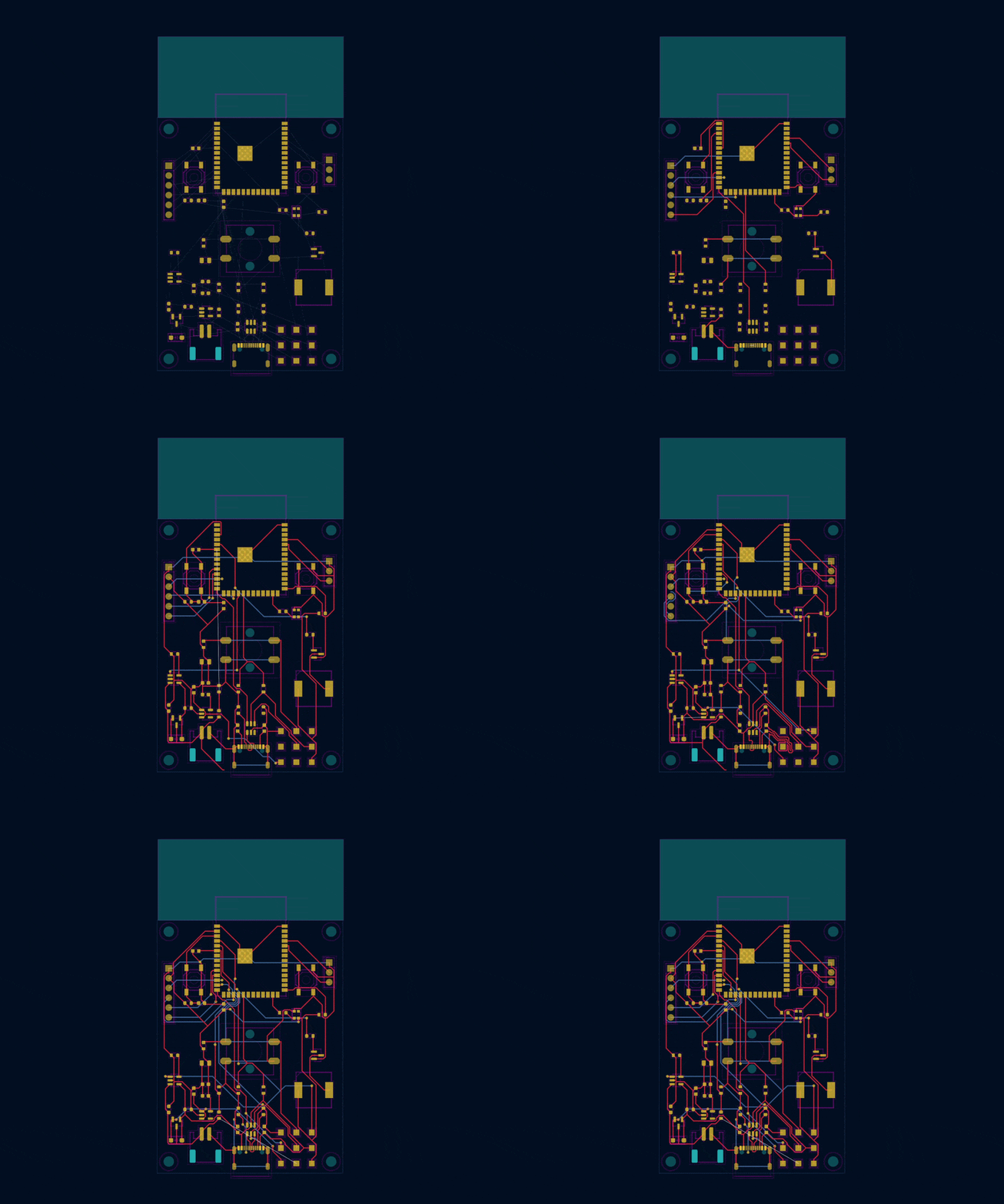
The KiCad schematic, the routing plan, and five design docs that have to stay in sync are all edited as real files, with ERC and DRC checked through kicad-cli. Claude reads the datasheets, holds the constraints, picks the parts, and writes down why each one is there.
Get Involved
Open Telegraph is in active design. Follow the build log, review the schematic, or propose an accessory for the expansion header.